Bahamas Property Tax Calculator
Instantly calculate annual real property tax, transfer VAT, and total closing costs for any Bahamas property. Updated for 2026 rates.
By Glenn Ferguson ◆ Updated

View Glenn's Full Credentials →


Quick Answer
Bahamas annual property tax ranges from $0 to $150,000/year maximum, based on assessed value and property type. Owner-occupied homes get the lowest rates — the first $300,000 is completely exempt. Foreign-owned and commercial properties pay 0.75%–1.5% depending on value tier. At purchase, foreign buyers also pay a one-time 10% transfer VAT, typically split 50/50 with the seller. There is no income tax, no capital gains tax, no inheritance tax, and no rental income tax. Use the calculator below for your exact numbers.
Bahamas Property Tax Calculator
Enter your property details for instant annual tax and closing cost estimates
Your Bahamas Property Tax Estimate
Annual Property Tax Breakdown
Estimated Total Closing Costs (Buyer's Side)
Estimates based on 2026 published rates. Actual DIR assessments may vary. For a personalized cost analysis on a specific property, ask Glenn or WhatsApp (242) 395-8495.
What You Need to Know Before Buying Property in The Bahamas
Can a US citizen (or any foreigner) buy property in The Bahamas?
Yes. Foreign buyers can purchase residential property up to 5 acres in The Bahamas without prior government approval. The purchase must be registered with the Bahamas Investment Authority (BIA) and the International Persons Landholding Act. Properties over 5 acres, or undeveloped land intended for commercial use, require a permit from the Investment Board. Foreign buyers enjoy the same property rights as Bahamian citizens — there are no ownership restrictions on residential real estate.
Is rental income taxed in The Bahamas?
No. There is no income tax on rental income in The Bahamas. However, if you rent out your property, you must obtain and annually renew a business license (fees typically range from $250–$1,250 depending on revenue). Properties enrolled in government-approved hotel rental programs (like Atlantis or Baha Mar rental pools) are subject to a separate Condo-Hotel Tax — see below. The Bahamas dollar is pegged 1:1 to the US dollar, so there is no currency risk for American investors.
Can I get permanent residency by buying property?
Property valued at $250,000 or more qualifies you to apply for annual residency. Property valued at $750,000 or more qualifies you to apply for Economic Permanent Residency, with expedited processing for properties valued at $1,500,000+. Residency allows you to qualify for the lower owner-occupied property tax rates, potentially saving thousands annually. Glenn handles the residency application process alongside property purchases — learn more about Bahamas residency.
Can I repatriate my money when I sell?
Yes. As long as you register the original purchase with the Exchange Control Department of the Central Bank of The Bahamas at the time of purchase, you can repatriate the entire proceeds including any profits when you sell. This is a standard part of the closing process that Glenn handles for all international buyer clients.
Do I need a mortgage or can I pay cash?
Both options are available. Cash purchases are common for international buyers and simplify the process. If you need financing, several banks in The Bahamas offer mortgages to foreign buyers — including RBC Royal Bank, CIBC FirstCaribbean, and Scotiabank — typically requiring 30–50% down payment. Note that there is a 1% stamp duty on mortgages payable by the borrower. See the full mortgage guide.
2026 Bahamas Real Property Tax Rates
All rates below are sourced from the Department of Inland Revenue (DIR) and the Real Property Tax Act as amended through July 2023. The Bahamian dollar (BSD) is pegged 1:1 to the US dollar.
Owner-Occupied (Primary Residence)
Applies when the owner occupies the property exclusively as a dwelling, on a permanent or seasonal basis (minimum ~90 days/year). Only one property per person or married couple qualifies.
| Assessed Value | Rate | Annual Tax |
|---|---|---|
| First $300,000 | Exempt | $0 |
| $300,001 – $500,000 | 0.625% | Up to $1,250 |
| Over $500,000 | 1.0% | Varies (capped at $150,000) |
Residential (Non-Owner-Occupied, 1–4 Units)
Applies to residential dwellings used solely as a dwelling but not occupied by the owner — e.g., rental duplexes, triplexes, fourplexes.
| Assessed Value | Rate | Annual Tax |
|---|---|---|
| Up to $75,000 | Flat fee | $300 |
| Above $75,000 | 0.625% | Varies (capped at $150,000) |
Foreign-Owned / Commercial / 5+ Residential Units
Applies to commercial properties, foreign-owned rentals not occupied by the owner, and any property with more than four residential units.
| Assessed Value | Rate | Annual Tax |
|---|---|---|
| First $500,000 | 0.75% | Up to $3,750 |
| $500,001 – $2,000,000 | 1.0% | Up to $15,000 |
| Over $2,000,000 | 1.5% | Varies |
| Any value | Capped | $150,000 maximum |
Vacant Land
| Owner | Assessed Value | Rate |
|---|---|---|
| Bahamian Citizen | Any value | Exempt ($0) |
| Foreign-Owned | First $7,000 | $100 flat fee |
| Above $7,000 | 2.0% of balance |
Property Transfer VAT (One-Time, Paid at Purchase)
This tax replaced the old stamp duty system in 2022. It is usually split 50/50 between buyer and seller, though this is negotiable in the sales agreement.
| Buyer Type | Property Value | VAT Rate |
|---|---|---|
| Bahamian Citizen | Under $100,000 | 2.5% |
| $100,001 – $300,000 | 4.0% | |
| $300,001 – $500,000 | 6.0% | |
| $500,001 – $700,000 | 8.0% | |
| $700,001 – $1,000,000 | 9.0% | |
| Over $1,000,000 | 10.0% | |
| Foreign Buyer | All values | 10.0% flat |
| First-Time Bahamian | $300,000 – $500,000 | 4.0% (reduced) |
Pensioner's Discount
Bahamian citizens aged 65+ with an NIB Senior Citizen's Card receive a 50% discount on the balance of real property tax due on their dwelling home after the $300,000 owner-occupied exemption is applied. This discount applies only to one property — the pensioner's primary residence.
What Does Ownership Actually Cost? 5-Year Examples
Foreign buyers often focus on the purchase price and transfer VAT, but the total cost of ownership is what matters. Here are three common scenarios for a foreign buyer:
| $500K Condo Cable Beach | $1M House Nassau | $3M Estate Paradise Island | |
|---|---|---|---|
| Transfer VAT (buyer's 50%) | $25,000 | $50,000 | $150,000 |
| Legal fees (~2%) | $10,000 | $20,000 | $60,000 |
| Year 1 closing costs | ~$37,500 | ~$72,500 | ~$212,500 |
| Annual property tax | $3,750 | $8,750 | $28,750 |
| 5-year tax total | $18,750 | $43,750 | $143,750 |
| 5-year all-in cost | ~$56,250 | ~$116,250 | ~$356,250 |
Excludes insurance, HOA/strata fees, maintenance, and property management. Annual tax shown at foreign-owned rates; owner-occupied rates are lower. See the complete annual cost guide for full figures by neighborhood.
Property Tax Exemptions in The Bahamas
The following properties are exempt from annual real property tax per the Real Property Tax Act:
Owner-occupied homes on the first $300,000 of assessed value. Unimproved (vacant) land owned by Bahamian citizens. Property in the Family Islands owned by Bahamians. All property located in Freeport, Grand Bahama (under the Hawksbill Creek Agreement). Crown land (except Crown land held under lease). Property used exclusively for religious worship. School buildings including gardens and playing fields. Property owned by foreign governments for consular offices or residences. Property used exclusively for charitable or public service purposes where no profit is derived. Buildings registered on the National Register of Historical Buildings (exemption must be applied for; not automatic).
All exemptions must be applied for through the Department of Inland Revenue — they are never granted automatically.
Condo-Hotel Tax (Since January 2023)
Condominiums, homes, villas, and townhouses registered in a government-approved hotel rental program (such as the Atlantis or Baha Mar rental pools) are subject to a separate annual Condo-Hotel Tax. This tax is set at 75% of the residential property rate (currently 0.625% of market value), with a ceiling of $150,000 per year. If the hotel program operator does not generate sufficient tax revenue from rentals to cover the amount, the operator and property owner share joint liability for the difference.
This is a critical consideration for buyers looking at resort-branded residences. Glenn can walk you through the math to determine whether projected rental income justifies the additional tax exposure for any specific property.
Bahamas Property Tax vs. US, UK & Canada
The Bahamas' zero-income-tax environment is one of the biggest financial advantages for property owners relocating from high-tax jurisdictions. Here's how the total tax picture compares for a $2,000,000 home:
| Tax Type | Bahamas | Florida (US) | New York (US) | London (UK) |
|---|---|---|---|---|
| Annual Property Tax | $18,750* | $34,000 | $42,000 | $6,200** |
| Income Tax | 0% | 0% state / 37% fed | 12.7% + 37% fed | 45% |
| Capital Gains Tax | 0% | 20% federal | 20% + 8.82% | 24% |
| Inheritance Tax | 0% | 0% state / 40% fed | 16% + 40% fed | 40% |
| Rental Income Tax | 0% | 37% federal | 37% + 12.7% | 45% |
| Property Tax Cap | $150,000/yr | No cap | No cap | No cap |
*Foreign-owned rate shown ($500K at 0.75% + $1.5M at 1%). Owner-occupied rate is lower at approximately $16,250. **UK Council Tax band H shown. UK property taxation also includes Stamp Duty Land Tax at purchase, which can reach 17% for non-UK residents on high-value properties.
The Tax Advantage in Practice
A high-income individual earning $500,000/year who relocates from New York to Nassau saves approximately $200,000–$250,000 per year in combined income and capital gains taxes alone — before accounting for lower property tax and zero inheritance tax. For many clients, the Bahamas property purchase effectively pays for itself through tax savings within 3–5 years.
How to Pay Bahamas Property Tax
When: Annual property tax is billed in the fourth quarter (typically October–December) for the following tax year. Pay in full by March 31st to receive a 10% discount. Tax must be paid by December 31st — a 5% surcharge is applied on January 1st for any unpaid balance.
Where: Department of Inland Revenue, Shops at Carmichael Plaza, Carmichael Road, Nassau. Also payable at any Royal Bank of Canada branch with your property assessment number.
Online: The Department of Inland Revenue offers an online payment portal at payment.revenue.gov.bs/rpt for registered property owners. Credit cards, cheques, and wire transfers are accepted.
What you need: Your property assessment number, found on your previous year's tax bill or assessment certificate. If you can't locate it, contact the DIR at (242) 225-7280 (toll free) or email propertytaxenquiries@bahamas.gov.bs.
Absentee Owner Tip
If you live overseas, your property manager should handle annual tax payments on your behalf. Glenn connects all buyer clients with trusted property management at closing and ensures tax compliance is included in the management agreement. Penalties accrue with non-payment, and outstanding tax creates a first charge on real property — meaning the government's claim takes priority over other liens. Don't leave this to chance.
Frequently Asked Questions: Bahamas Property Tax
How much is property tax on a $1 million home in The Bahamas?
Is Bahamas property tax higher for foreigners?
What is the 10% VAT on Bahamas property purchases?
Can I reduce my Bahamas property tax?
Can a US citizen buy property in The Bahamas?
Are there any islands exempt from property tax?
What are total closing costs for a foreign buyer?
Is rental income taxed in The Bahamas?
Can I get residency by buying property in The Bahamas?
Do I pay property tax on vacant land in The Bahamas?
When is Bahamas property tax due and what happens if I pay late?
Is there VAT on top of property tax?
Can I appeal my property tax assessment?
Do Bahamians pay different property tax than foreigners?
Can I repatriate sale proceeds when I sell my Bahamas property?
Ready to Buy Property in The Bahamas?
24+ years helping international buyers find the right property, navigate taxes and residency, and close with confidence. Free tax estimates and personalized cost analysis for any property.
Ask Glenn a Question WhatsApp Glenn Call (242) 395-8495Related Bahamas Real Estate Guides
Complete Guide to Bahamas Real Estate Taxes
Annual Cost of Ownership by Neighborhood
Mortgage Guide for Foreign Buyers
Bahamas Residency by Investment Calculator
Rental Income Guide by Neighborhood
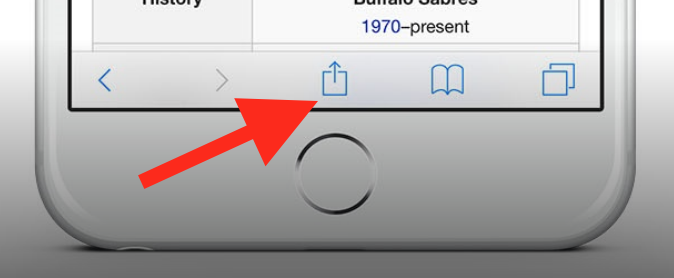
To add this web app to your homescreen, click on the "Share" icon
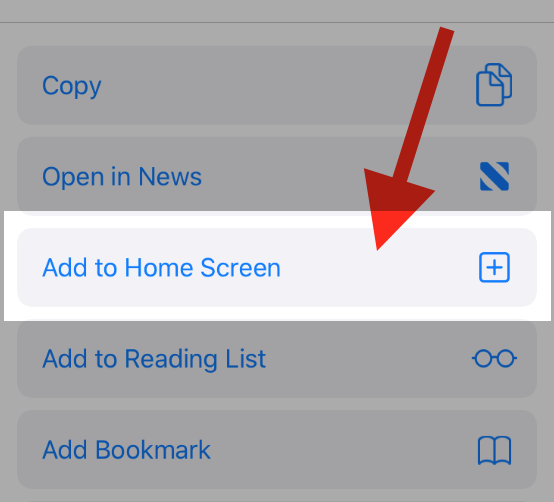
Then click on "Add to Home"
To add this web app to your homescreen, click on the "Share" icon
Then click on "Add to Home"
It looks like your browser doesn't natively support "Add To Homescreen", or you have disabled it (or maybe you have already added this web app to your applications?)
In any case, please check your browser options and information, thanks!
It looks like your browser doesn't natively support "Add To Homescreen", or you have disabled it (or maybe you have already added this web app to your applications?)
In any case, please check your browser options and information, thanks!