Bahamas Residency for British Investors
British citizens can obtain lifetime permanent residency in The Bahamas by purchasing real estate valued at $1,000,000 or more. With the UK non-dom regime abolished from 6 April 2025 under the Finance Act 2025, The Bahamas offers British HNI investors a compelling alternative: 0% income tax, 0% capital gains tax, 0% inheritance tax, and a fellow Commonwealth legal system built on English common law.
Complete guide: Economic Permanent Residency (EPR) programme, HMRC implications of the non-dom abolition, inheritance tax planning, qualifying luxury properties, and the step-by-step process from London to Nassau.


The opportunity
Why British Investors Choose The Bahamas
0% Income Tax
The Bahamas imposes no personal income tax, no corporate income tax, and no capital gains tax under the Revenue Administration Act. British investors who establish Bahamas residency and cease UK tax residency escape HMRC's worldwide income taxation, which currently reaches up to 45% at the additional rate on income above GBP 125,140 (2025/26 tax year).
0% Inheritance Tax
The Bahamas has no inheritance tax, estate duty, or death duty. The UK charges inheritance tax (IHT) at 40% on estates above the nil-rate band (NRB) of GBP 325,000, frozen by HMRC until 2030-31. For British investors with estates exceeding GBP 2 million, the residence nil-rate band (RNRB) of GBP 175,000 is also tapered away entirely.
USD-Denominated Assets
The Bahamian Dollar (BSD) is pegged 1:1 to the US Dollar by the Central Bank of The Bahamas, a monetary policy maintained since 1973. For British investors, Bahamas real estate is a USD-denominated hard asset providing diversification away from Sterling, which has fluctuated significantly against the Dollar since Brexit.
Freehold Ownership
British citizens can own property outright with full freehold title under Bahamas common law. The International Persons Landholding Act permits unrestricted foreign ownership of residential property. Property rights are identical to those held by Bahamian citizens, with title registered at the Bahamas Registrar General's Office.
Commonwealth Nation
The Bahamas gained independence from Britain on 10 July 1973 and remains a full member of the Commonwealth of Nations. The legal system is based on English common law, familiar to British solicitors. The Judicial Committee of the Privy Council in London remains the final court of appeal. English is the official language.
9 Hours Direct
British Airways operates daily direct flights from London Heathrow (LHR) Terminal 3 to Nassau's Lynden Pindling International Airport (NAS) on the Boeing 777 (flight BA253). Flight time is approximately 9 hours 10 minutes outbound. Nassau is closer than many Caribbean alternatives and on the same time zone as New York (EST/UTC-5).
United Kingdom vs. The Bahamas: Tax Comparison for HNI Investors
| Tax Category | United Kingdom (HMRC) | The Bahamas |
|---|---|---|
| Personal Income Tax | Up to 45% additional rate (on income above GBP 125,140) | 0% |
| Capital Gains Tax | 18% basic rate / 24% higher rate (2025/26) | 0% |
| Inheritance / Estate Tax | 40% on estates above GBP 325,000 NRB | 0% |
| Corporation Tax | 25% (main rate, 2025/26) | 0% |
| Dividend Tax | Up to 39.35% (additional rate) | 0% |
| Non-Dom / Remittance Basis | Abolished 6 April 2025 (Finance Act 2025) | Not applicable (no income tax) |
| Property Transfer Tax | SDLT up to 12% + 5% surcharge for non-UK residents | ~7-8% (VAT on conveyance + legal fees) |
| Annual Property Tax | Council Tax (varies by band and local authority) | 1% on value above $500K (owner-occupied) |
| Wealth / Net Worth Tax | None (but Mansion Tax proposed from 2028) | 0% |
| Tax Treaty Status | UK-Bahamas TIEA (Tax Information Exchange Agreement) signed 29 October 2009. Not a full double taxation treaty. Covers criminal and civil tax information exchange upon request. | |
British buyers have been part of Bahamas real estate since the islands were a Crown Colony. Over my 24 years in this market, I have seen a significant increase in British interest following the Brexit vote in 2016, again during the non-dom consultation in 2023-24, and most dramatically since the Finance Act 2025 confirmed the abolition. London-based professionals, entrepreneurs exiting businesses, and retired City executives are the three most common British buyer profiles I work with. The shared Commonwealth legal tradition and the Privy Council as final court of appeal give British buyers a comfort level they rarely find elsewhere in the Caribbean.
Travel & entry
Getting to The Bahamas from the United Kingdom
Visa-free entry: British citizens receive 3 months on arrival, extendable in-country up to a total of 8 months. No visa fee or prior application is required. You must present a valid British passport, proof of accommodation, and evidence of sufficient funds.
Direct flights: British Airways BA253 departs London Heathrow daily, arriving at Lynden Pindling International Airport (NAS). Return flight BA252 departs Nassau daily, arriving Heathrow Terminal 3 the following morning. Connecting options exist via Miami (American Airlines, multiple daily flights), New York JFK (JetBlue, Delta), and Toronto (Air Canada). Private aviation services are available at Nassau's Odyssey Aviation FBO.
Passport requirements: Your British passport must be valid for at least 6 months from your date of entry. British Overseas Territories Citizens (BOTC), British Overseas Citizens (BOC), and British National (Overseas) passport holders should check with the Bahamas High Commission London for specific entry requirements.
Once you hold EPR: Economic Permanent Residency eliminates all visa restrictions. You can enter and exit The Bahamas freely at any time, on any airline, with no time limits and no need to show proof of onward travel.

Residency programme
Economic Permanent Residency for British Investors
| EPR Cost Component | Amount (BSD/USD) | Notes |
|---|---|---|
| Real estate purchase | $1,000,000+ | Minimum threshold (Jan 2025) |
| Government EPR fee | $20,000 | Primary applicant |
| Dependant endorsement | $300/person | Spouse + children under 18 |
| VAT on conveyance | ~5% (buyer share) | Total VAT ~10%, split buyer/seller |
| Legal fees | 1-2.5% | Bahamian attorney conveyancing |
| Annual real property tax | ~1% above $500K | Owner-occupied rate |
For my British clients, I typically coordinate the entire EPR process alongside the property purchase. I compile your financial references, arrange the Royal Bahamas Police Force clearance certificate, coordinate the medical examination, and prepare the documentation package for the Bahamas Department of Immigration. Most British buyers are surprised how straightforward it is compared to UK Home Office immigration processes. The 90-day residency requirement is flexible and can be split across the year, making it ideal for those who want to spend British winters in The Bahamas while maintaining a UK summer base.
UK tax implications
Non-Dom Abolition, HMRC & Establishing Non-UK Tax Residency
Statutory Residence Test (SRT): Whether you are UK tax resident is determined by the SRT, introduced under Part 1 of the Finance Act 2013. The SRT considers days spent in the UK, ties to the UK (such as UK property, UK-based spouse, UK employment, and children at UK schools), and whether you have a home in the UK. To become non-UK tax resident, you generally need to spend fewer than 16 days in the UK if you have been UK resident for at least 12 of the previous 14 tax years, or fewer than 46 days if you were not UK resident in all of the preceding 3 tax years. Professional advice on your specific circumstances is essential.
4-year FIG regime: Individuals who become UK tax resident after at least 10 consecutive tax years of non-UK residence can claim complete relief from UK tax on foreign income and gains for up to 4 tax years. This applies regardless of domicile. If a British investor moves to The Bahamas, establishes non-UK residence for 10 full tax years, and then returns to the UK, they could benefit from 4 years of FIG relief. However, this is a limited transitional measure and not a permanent solution.
Capital gains tax (CGT): UK residents pay CGT at 18% (basic rate taxpayers) or 24% (higher and additional rate taxpayers) on gains from all assets, including foreign property, for 2025/26. The annual CGT exemption is just GBP 3,000. If you cease UK tax residency and sell Bahamas property while non-UK resident, the gain is generally outside UK CGT provided you remain non-UK resident for at least 5 full tax years under the temporary non-residence anti-avoidance rules in Schedule 45 of the Finance Act 2013.
UK-Bahamas TIEA: The United Kingdom and The Bahamas signed a Tax Information Exchange Agreement (TIEA) on 29 October 2009 at the Ministry of Finance in Nassau. This allows HMRC to request tax information from Bahamas authorities in relation to specific investigations. It is not a full double taxation agreement. Because The Bahamas imposes no income tax, double taxation does not arise in practice.
If you leave the UK and return within 5 full tax years, gains realised during your absence may be taxed on your return under Schedule 45 of the Finance Act 2013. This applies to gains on assets you held before departing the UK. For Bahamas property purchased after you leave the UK, this rule generally does not apply. Always obtain professional advice from a UK solicitor or chartered accountant before restructuring your tax residency. HMRC actively scrutinises arrangements designed to avoid UK tax through temporary non-residence.
Inheritance tax
Inheritance Tax Planning for British Investors
New long-term UK resident test: From 6 April 2025, the concept of domicile has been replaced by a residence-based test for IHT purposes. You are a long-term UK resident if you have been UK tax resident in 10 of the previous 20 tax years. Even after leaving the UK, your worldwide assets remain within the scope of UK IHT for a further period (up to 10 years, reduced by years of non-UK residence after departure). This means that simply moving to The Bahamas does not immediately remove your worldwide assets from UK IHT.
Planning timeline: The 10-year tail means that comprehensive IHT planning requires long-term commitment to non-UK residence. For British investors who establish Bahamas residency and maintain it for at least 10 full tax years while remaining non-UK resident, their worldwide estate can eventually fall outside the UK IHT net entirely. UK-situs assets (such as UK property) always remain subject to UK IHT regardless of residence status.
Bahamas property and UK IHT: Once you are no longer a long-term UK resident (and have exceeded the tail period), Bahamas property will not be subject to UK IHT. Until that point, it may technically fall within the UK IHT charge as a worldwide asset. Structuring and timing of the investment should be discussed with a UK solicitor specialising in international estate planning.
No Bahamas succession tax: In The Bahamas, there is no tax on death, no forced heirship rules (unlike many civil law jurisdictions), and property passes according to a will governed by Bahamian law or, in the absence of a will, under the Bahamas Inheritance Act. British investors can structure their Bahamas estate through a Bahamian will, ensuring efficient transfer to heirs without tax or forced sharing obligations.
Do not assume that moving to The Bahamas immediately eliminates UK IHT. The new long-term UK resident test includes a tail period of up to 10 years after departure. During this period, your worldwide assets (including Bahamas property) may still be within the scope of UK IHT at 40%. Professional advice from a UK solicitor or chartered tax adviser specialising in international estate planning is essential before making any relocation decisions.

Qualifying properties
Properties That Qualify for British Investor EPR
Luxury Condominiums
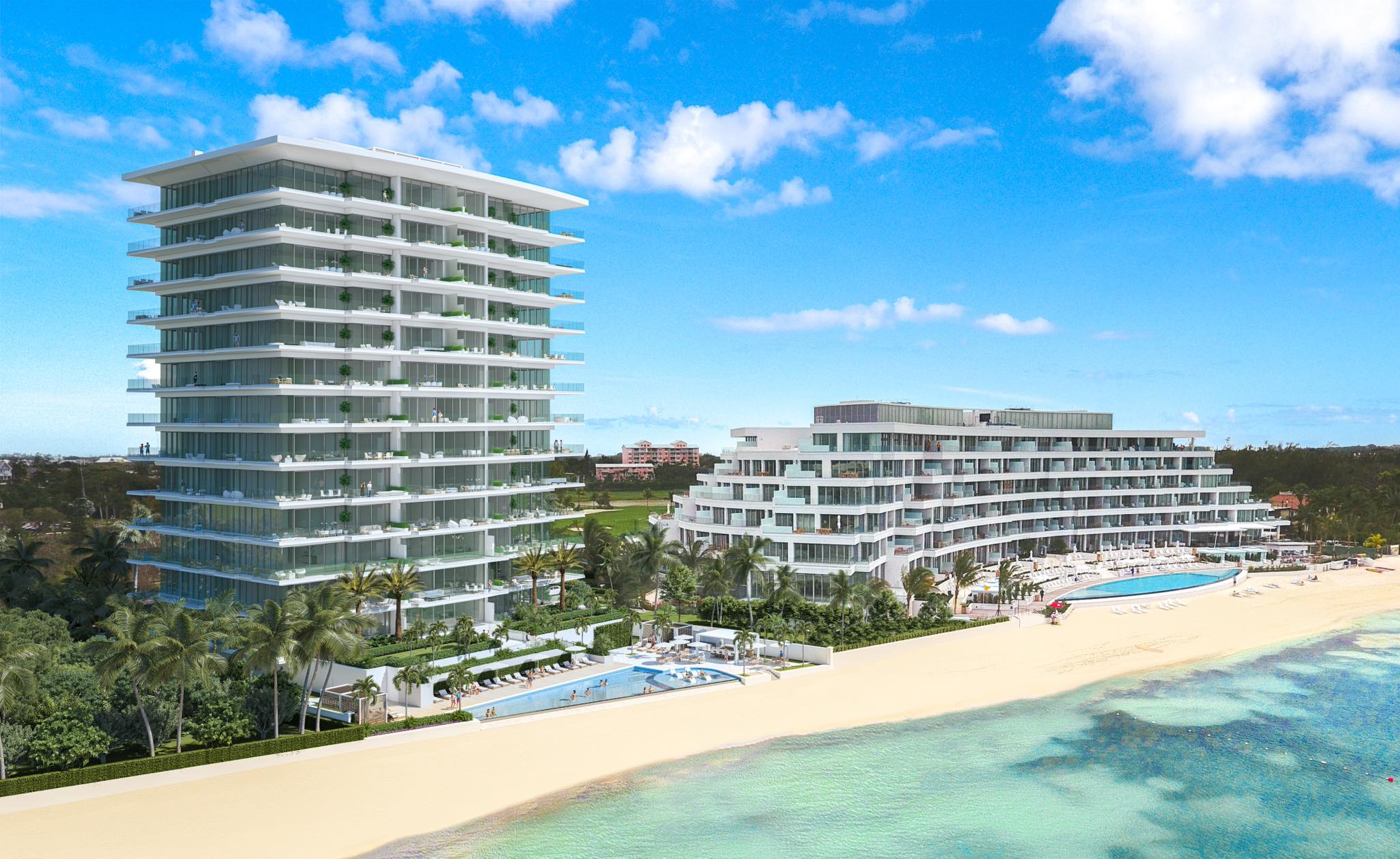
Turn-key units in developments like Aqualina at Cable Beach (developed by Sterling Global Financial), Goldwynn Residences on West Bay Street, and Baha Mar Residences (operated by Rosewood, SLS, and Grand Hyatt). Popular with London-based professionals who want a managed, lock-up-and-leave property while they are in the UK during summer months.
Gated Community Homes
Ocean Club Estates on Paradise Island (the original Four Seasons community), Albany (co-founded by Tiger Woods and Justin Timberlake), Lyford Cay (Nassau's most established enclave since 1959), and Old Fort Bay. These communities offer marina, golf, tennis, and beach club amenities familiar to residents of Wentworth, Sunningdale, and St George's Hill.
Beachfront Villas
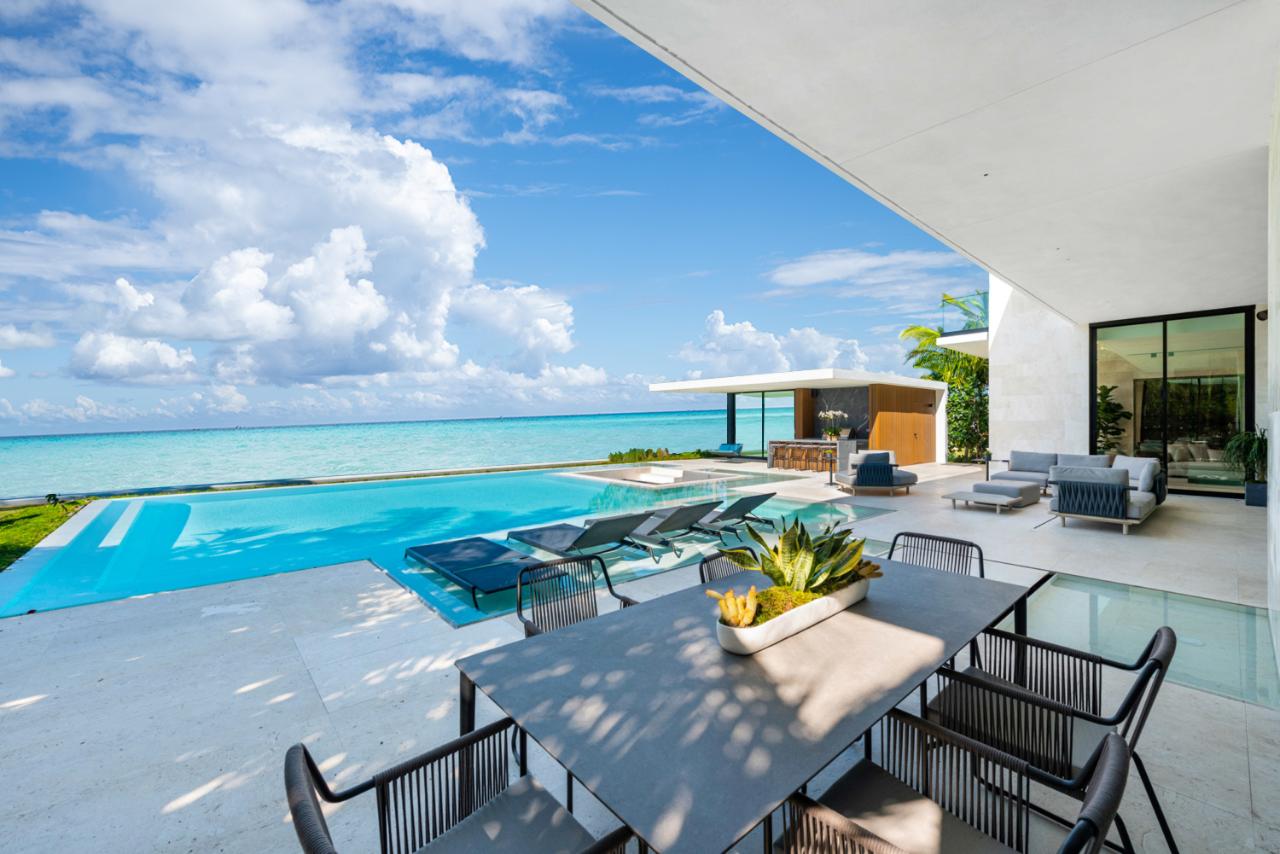
Standalone waterfront homes on Cable Beach, Eastern Road, and the Out Islands (including Harbour Island, Exuma, and Eleuthera). These freehold properties often appreciate most strongly according to Bahamas Real Estate Association (BREA) market data, offering British buyers direct Caribbean beach access and maximum privacy.
My British clients tend to prioritise two things: on-site management (so the property is maintained while they are in the UK) and proximity to the British Airways route at Nassau airport. Developments like Aqualina, Goldwynn, and Albany all tick both boxes. For clients from the City who are used to high-end finishes and modern amenities, Ocean Club Estates and Albany feel immediately familiar. I have helped British buyers from Mayfair, Chelsea, and the Home Counties find the right Bahamas property to match both their investment criteria and their lifestyle expectations.
Beyond EPR
Citizenship Pathway for British Citizens
Requirements: You must hold Economic Permanent Residency for a minimum of 10 consecutive years. During that period, you must have been a de facto resident in The Bahamas for at least 6 years. The naturalisation application is submitted to the Ministry of Immigration and assessed on the merits.
Dual citizenship considerations: The Bahamas does not formally recognise dual citizenship, meaning you would technically be required to renounce your British citizenship upon naturalisation. However, enforcement has historically varied. Many British permanent residents choose to maintain EPR indefinitely, as EPR provides the primary benefits of residing in The Bahamas without raising dual citizenship complications.
British citizenship renunciation: Under the British Nationality Act 1981, renunciation of British citizenship requires a formal declaration to the UK Home Office. It is irrevocable (with very limited exceptions) and results in loss of right of abode, right to work in the UK, NHS entitlement, and UK state pension access. The vast majority of British investors I work with prefer the EPR route permanently.
Step by step
How British Investors Obtain Bahamas Residency
Contact Glenn
Discuss your budget, goals, timeline, and preferred property type with Glenn Ferguson (BREA #1247). Get connected with a UK solicitor or chartered tax adviser specialising in cross-border planning and the SRT.
Plan Your Tax Structure
Work with your UK adviser on SRT compliance, temporary non-residence rules under Schedule 45 Finance Act 2013, IHT tail period planning, CGT rebasing, and the TRF for pre-April 2025 unremitted FIG if applicable.
Visit Nassau
Fly direct from London Heathrow on British Airways BA253 (9 hours 10 minutes). Glenn arranges 2 to 3 days of curated property viewings across EPR-qualifying developments in New Providence and Paradise Island.
Reserve & Sign SPA
Place a deposit (typically 10%) and sign the Sale and Purchase Agreement (SPA), a legally binding contract under Bahamas common law. Glenn coordinates with your Bahamian attorney for title search at the Registrar General's Office.
Transfer Funds
Wire purchase funds from your UK bank (HSBC, Barclays, NatWest, Lloyds, and private banks including Coutts and C. Hoare all handle Bahamas transfers). Amounts are in USD via the BSD peg. Title search and due diligence proceed in parallel.
Close & Register
Complete the conveyance at your Bahamian attorney's office, pay VAT on conveyance (approximately 10% total, split between buyer and seller) and legal fees. Property title is registered with the Bahamas Registry of Records under the Registration of Records Act.
File EPR Application
Glenn compiles your financial references (bank statements, net worth declaration), Royal Bahamas Police Force clearance certificate, medical certificate, and property documentation including executed SPA and conveyance deed. Application submitted to the Bahamas Department of Immigration.
Receive EPR Certificate
Approval typically takes 3 to 4 months from the Bahamas Department of Immigration. Pay the $20,000 government fee plus $300 per dependant endorsement. Your EPR certificate is valid for life, and you may enter and exit The Bahamas freely.
Ready to start your Bahamas investment?
Glenn guides British investors through every step, from property selection to EPR approval.
Complete Buying Guide
Step-by-step process for purchasing Bahamas real estate as a foreigner.
Read Guide →Can a Foreigner Buy?
Legal requirements, property rights, and approval process for foreign buyers.
Read Guide →Aqualina at Cable Beach
Luxury beachfront condos from $1.2M. On-site management for absentee owners.
View Property →2026 Market Report
Nassau price trends, rental yields, and investment outlook for the year ahead.
Read Report →Browse All Listings
Search all homes, condos, and land for sale in Nassau and the islands.
View Listings →Indian Investor Guide
Comprehensive guide for Indian HNI investors seeking Bahamas EPR residency.
Read Guide →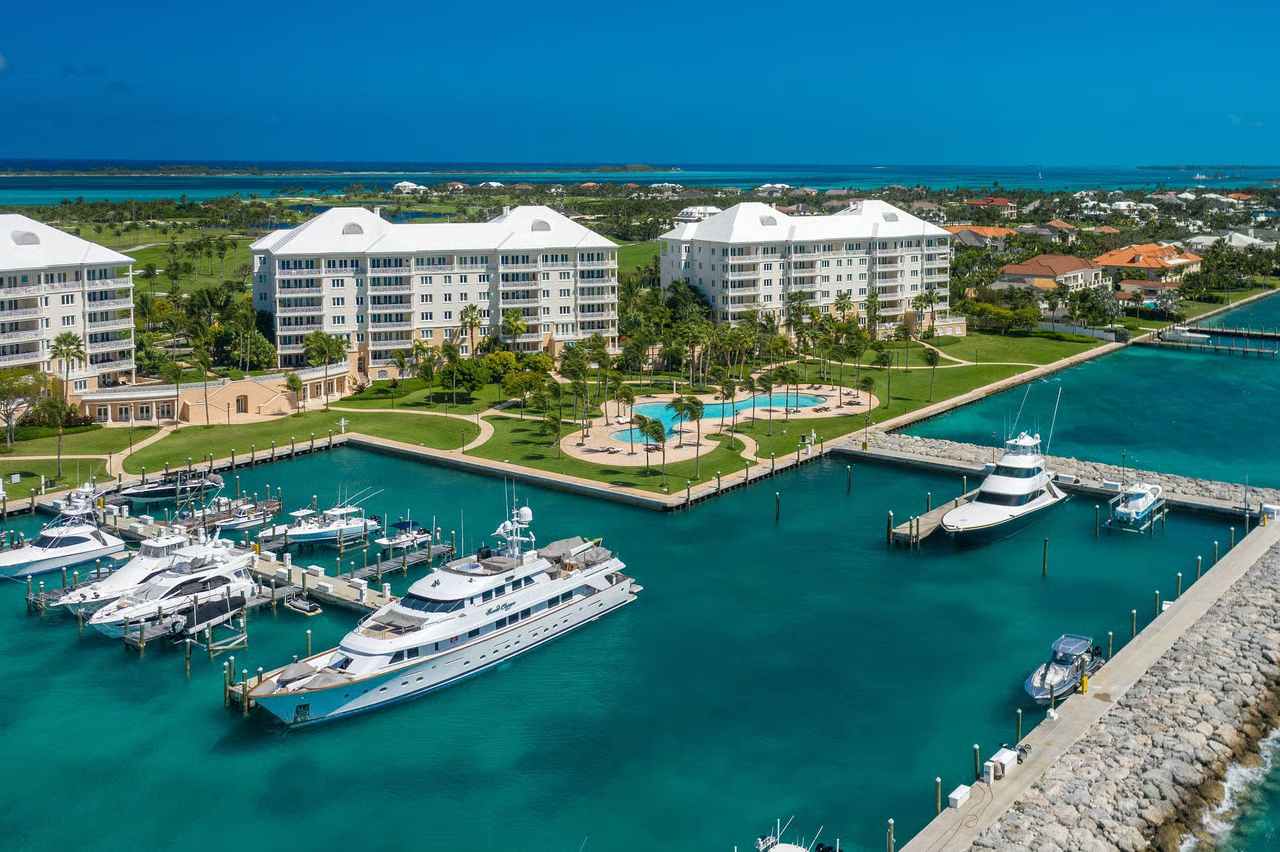
Frequently asked questions
British Investor FAQ
Can British citizens get permanent residency in The Bahamas?
Do British citizens need a visa to visit The Bahamas?
How does the abolition of UK non-dom status affect Bahamas property investment?
What are the EPR government fees?
Is there inheritance tax in The Bahamas?
What UK capital gains tax applies to Bahamas property?
Can Bahamas EPR lead to citizenship for British citizens?
How do I start the process from the UK?
Glenn Ferguson
Licensed Bahamas real estate agent and residency consultant with over 24 years of experience guiding international buyers through property purchase and Economic Permanent Residency applications. Specialist in British, Canadian, Indian, and American investor transactions. Glenn has facilitated hundreds of property purchases across Nassau, Paradise Island, and the Out Islands.
BREA #1247 • Bahamas MLS • WPIC-Certified Wedding Planner • Licensed Marriage Officer
Start Your Bahamas Investment Journey
Glenn Ferguson has guided hundreds of international buyers through property purchase and EPR applications. Let him do the same for you.
British Investor Enquiry
To add this web app to your homescreen, click on the "Share" icon

Then click on "Add to Home"
To add this web app to your homescreen, click on the "Share" icon
Then click on "Add to Home"
It looks like your browser doesn't natively support "Add To Homescreen", or you have disabled it (or maybe you have already added this web app to your applications?)
In any case, please check your browser options and information, thanks!
It looks like your browser doesn't natively support "Add To Homescreen", or you have disabled it (or maybe you have already added this web app to your applications?)
In any case, please check your browser options and information, thanks!
