Bahamas Permanent Residency for Canadian Investors
Purchase $1M+ Bahamas real estate → apply for lifetime Economic Permanent Residency. Zero income tax. Zero capital gains. 8-month visa-free entry. CRA T1135 & departure tax guidance included.
Verified against CRA, Bahamas Immigration, Department of Finance Canada · February 2026


 BREA Licensed Agent ·
#1247 ·
Bahamas MLS Member ·
Residency Consultant ·
24+ Years ·
1-242-395-8495
BREA Licensed Agent ·
#1247 ·
Bahamas MLS Member ·
Residency Consultant ·
24+ Years ·
1-242-395-8495
Why Canadian Investors Are Choosing Bahamas Real Estate
Canadians are the second-largest group of foreign property buyers in The Bahamas, according to the Knight Frank 2025 Wealth Report. American buyers led the foreign market throughout 2024, followed by investors from Canada and the European Union. The same report noted that roughly half of wealthy expatriates in The Bahamas now hold permanent residency, up from about 20% before the pandemic.
The Bahamas Department of Immigration administers the Economic Permanent Residency (EPR) programme under the Immigration Act, granting lifetime residency to investors who purchase qualifying real estate valued at $1,000,000 or more. The Bahamas imposes no personal income tax, no corporate income tax, no capital gains tax, and no inheritance tax. For Canadian residents taxed on worldwide income by the CRA under the Income Tax Act (Canada) — currently reaching up to 53.53% at the top combined federal-provincial rate in Ontario — this zero-tax jurisdiction represents a significant planning opportunity.
0% Income Tax
The Bahamas imposes no personal income tax, no corporate income tax, and no capital gains tax. Canadian investors who establish Bahamas residency and cease Canadian tax residency can eliminate the CRA's worldwide income taxation (up to 53.53% combined in Ontario, 54% in Nova Scotia).
CAD–USD Currency Hedge
The Bahamian Dollar is pegged 1:1 to the US Dollar by the Central Bank of The Bahamas since 1973. Bahamas real estate is a USD-denominated hard asset — a natural hedge against Canadian Dollar depreciation, which has averaged 25–30% weakness against the USD over the past decade.
Freehold Ownership
Canadians own property outright with full freehold title under Bahamas common law. The International Persons Landholding Act permits unrestricted foreign ownership of owner-occupied residential property. Property rights are identical to those held by Bahamian citizens.
Lifetime EPR
Economic Permanent Residency through $1M+ real estate is valid for life. Spouse and dependent children under 18 endorsed at $300 per person. 90 days/year minimum presence (cumulative, not consecutive). 10-year hold period.
English Common Law
The Bahamas operates under English common law — the same legal tradition as Canada's common-law provinces. Property transactions follow established Torrens-style conveyancing. The Supreme Court of The Bahamas and the Privy Council in London provide judicial oversight.
Under 4 Hours Away
Air Canada and WestJet operate direct flights from Toronto Pearson (YYZ), Montreal–Trudeau (YUL), Ottawa (YOW), Calgary (YYC), and Halifax Stanfield (YHZ). Toronto to Nassau: 3 hours 20 minutes — closer than Phoenix, Los Angeles, or Cancún.
Getting to The Bahamas from Canada
Canadian citizens can stay in The Bahamas for up to 8 months without a visa, as confirmed by the Bahamas Department of Immigration and Canada's Travel Advisory (travel.gc.ca). No tourist visa is required. You need only a valid Canadian passport. Canadian permanent residents (non-citizens holding a Permanent Resident Card) can stay for up to 30 days without a visa.
Passport requirements: Your Canadian passport must be valid for at least 3 months after your return date for direct travel to The Bahamas, or 6 months if transiting through the United States. Most airlines require 6-month validity regardless of routing.
Direct flights: Air Canada, WestJet, and seasonal charter operators fly nonstop from Toronto Pearson (YYZ), Montréal–Trudeau (YUL), Ottawa (YOW), Calgary (YYC), and Halifax (YHZ) to Nassau's Lynden Pindling International Airport (NAS). Toronto to Nassau: approximately 3 hours 20 minutes.
After EPR is granted: Once you receive Economic Permanent Residency, you enter and exit The Bahamas freely without any visa or length-of-stay restrictions. You carry your EPR certificate alongside your Canadian passport. This eliminates the 8-month limitation entirely.
Travelling with minors: If a child is travelling with only one parent, a notarised letter of consent from the other parent may be requested by Bahamas immigration officers.
 Economic Permanent Residency
The EPR Program — Complete Details for Canadian Applicants
Effective January 1, 2025, the minimum qualifying investment for Economic Permanent Residency (EPR) increased from $750,000 to $1,000,000, as confirmed by the Bahamas Immigration Department, Lennox Paton (March 2025), and the Legal 500 Bahamas Real Estate Guide (March 2025). EPR is a residency classification under the Immigration Act of The Bahamas granting the right to reside indefinitely. The qualifying property must be held for a minimum of 10 years. EPR holders must spend at least 90 days per year in The Bahamas (cumulative, not consecutive). Accelerated consideration is given to investments of $1,500,000 or more.
What qualifies: Residential real estate valued at $1,000,000 or more. The investment can be a single property or multiple properties totalling the threshold. Qualifying alternatives include Central Bank of The Bahamas zero-coupon bonds, though real estate is the preferred route for most Canadian investors.
Hold period: The property must be maintained for at least 10 years from the date of EPR approval. Selling before the 10-year mark can result in revocation of your residency status.
Presence requirement: EPR holders must spend a minimum of 90 days per year in The Bahamas. This is cumulative across the year and does not need to be consecutive.
Family inclusion: Spouse and dependent children under 18 can be endorsed on your EPR certificate at $300 per person. Children who turn 18 need to apply separately.
Work rights: The standard $20,000 EPR does not include the right to work or operate a business. However, the $25,000 EPR option grants the right to engage in gainful occupation in your own business, as confirmed by the Bahamas Immigration Fee Schedule. A separate work permit is required for employment under either tier.
| EPR Cost Item | Amount (USD/BSD) |
|---|---|
| Minimum property investment | $1,000,000 |
| Accelerated processing threshold | $1,500,000+ |
| EPR government fee (without work rights) | $20,000 |
| EPR government fee (with work rights in own business) | $25,000 |
| Non-refundable processing fee | $100 |
| Spouse endorsement | $300 |
| Each dependent child (under 18) | $300 |
| 10-year declaration renewal | Filed every 10 years |
Tax Comparison: Canada vs. The Bahamas for HNI Investors
| Tax Category | Canada (CRA) | The Bahamas |
|---|---|---|
| Personal Income Tax | Up to 53.53% (ON) / 54% (NS) combined federal + provincial | 0% |
| Capital Gains Tax | 50% inclusion rate (taxed at marginal rate) | 0% |
| Corporate Income Tax | Up to 26.5% (federal + provincial combined) | 0% |
| Inheritance / Estate Tax | Deemed disposition at death (capital gains triggered) | 0% |
| Dividend Tax | Up to 39.34% (non-eligible dividends, ON) | 0% |
| Property Transfer Tax | Varies by province (e.g. Ontario Land Transfer Tax) | ~8–10.5% (VAT + legal) |
| Annual Property Tax | Varies by municipality (assessed value) | First $300K exempt; 0.625% $300K–$500K; 1% above $500K; cap $120K/yr |
| Wealth / Net Worth Tax | None (but AMT applies) | 0% |
| Foreign Income Reporting | T1135 if specified foreign property > CAD $100K | No worldwide income reporting |
| Tax Treaty Status | Canada–Bahamas TIEA signed June 17, 2010; in force November 16, 2011. Not a full double taxation treaty. | |
Sources: Canada Revenue Agency (2025–2026 tax rates), TaxTips.ca, Department of Finance Canada Budget 2025, Bahamas Department of Inland Revenue, Real Property Tax Act (Bahamas).
CRA foreign property reportingCRA Form T1135 — Foreign Property Reporting for Bahamas Real Estate
Whether you must file CRA Form T1135 (Foreign Income Verification Statement) depends on how you use your Bahamas property. Under subsection 233.3(1) of the Income Tax Act (Canada), "specified foreign property" includes tangible property situated outside Canada, but explicitly excludes personal-use property — defined by the CRA as property used primarily (more than 50%) for personal use and enjoyment.
Personal-use exemption: If your Bahamas property is used primarily for personal enjoyment — your winter home, family vacation retreat, retirement base — it is excluded from T1135 reporting. This is a question of fact determined case by case.
When T1135 is required: If you rent your Bahamas property for profit more than 50% of the time, it becomes specified foreign property. You must file T1135 if the total cost of all your specified foreign property exceeds CAD $100,000 at any point during the tax year. The cost amount is the adjusted cost base, not fair market value.
Simplified vs. detailed reporting: Total specified foreign property cost between CAD $100,000 and $250,000 uses Part A (simplified — check boxes, top three countries). Above CAD $250,000 requires Part B (detailed — each property listed with maximum cost, year-end cost, and income).
Filing deadline: T1135 is due on the same date as your income tax return — April 30 for individuals (June 15 for self-employed, but tax owing is still due April 30).
Departure Tax, Capital Gains & Canadian Tax Obligations
If you relocate permanently to The Bahamas and cease to be a Canadian tax resident, you trigger a deemed disposition of most worldwide assets at fair market value under section 128.1 of the Income Tax Act (Canada). This means the CRA treats you as if you sold your non-exempt assets on the day you leave Canada, crystallising any accrued capital gains.
Capital Gains Inclusion Rate — 2025 & 2026
The capital gains inclusion rate remains at 50% for 2025 and 2026. The proposed increase to 66.67% for gains above $250,000 was first introduced in the April 2024 federal budget, deferred from June 25, 2024 to January 1, 2026 on January 31, 2025 by Finance Minister LeBlanc, and then cancelled outright by Prime Minister Mark Carney on March 21, 2025. Budget 2025 (tabled November 4, 2025) formally confirmed the cancellation. The Canadian Entrepreneurs' Incentive was also cancelled in Budget 2025.
Lifetime Capital Gains Exemption (LCGE): $1,250,000 for qualified small business corporation shares and farming/fishing property (effective June 25, 2024). Indexed for inflation starting 2026.
Federal tax rate reduction: The lowest federal income tax rate was reduced from 15% to 14% effective July 1, 2025 (14.5% blended rate for 2025, 14% for 2026+), per Budget 2025.
What Triggers Deemed Disposition
Taxable on departure: Non-registered investment portfolios, shares in Canadian and foreign private corporations, foreign real estate (including your Bahamas property if owned before departure).
Exempt from deemed disposition: Canadian real estate (taxed on actual sale), RRSPs, TFSAs, RRIFs, RESPs, RDSPs, FHSAs, and registered pension plans.
Deferral & Mitigation Options
Form T1244: Elect to defer departure tax payment. The deferred tax becomes payable when you actually sell the asset or if you return to Canada. Security may be required for liabilities above CAD $16,500.
Form T1161: List of Properties by an Emigrant of Canada — required if total fair market value of all property owned at departure exceeds CAD $25,000 (excluding cash, pensions, personal-use property under $10,000, and Canadian real estate).
Staying Canadian Without Emigrating
Many Canadian investors purchase Bahamas property without ceasing Canadian residency. In this scenario, there is no departure tax. You continue filing Canadian returns on worldwide income. The Bahamas property simply becomes a personal-use or investment asset reported according to standard CRA rules. This is the most common structure among my Canadian clients who plan to split time between both countries.
Canada–Bahamas TIEA
Canada and The Bahamas signed a Tax Information Exchange Agreement on June 17, 2010 (in force November 16, 2011). This is not a full double taxation treaty but provides for mutual exchange of tax information. Because The Bahamas imposes no income tax, double taxation does not arise in practice.
Rental income: Not taxed in The Bahamas. However, as a Canadian tax resident, you must report worldwide income including Bahamas rental income on your Canadian return. As a non-resident of Canada who has emigrated, Bahamas rental income is not subject to Canadian tax since it is not Canadian-sourced.
CPP and OAS: If you emigrate, CPP and OAS pension payments continue but are subject to 25% non-resident withholding tax under Part XIII of the Income Tax Act. No TIEA reduction available (a full treaty would be required).
Alternative Minimum Tax (AMT) — 2025–2026 Changes
Even with the 50% capital gains inclusion rate, Canadian investors may face higher Alternative Minimum Tax (AMT) exposure. The revised AMT rules (effective January 1, 2024) increased the federal AMT rate from 15% to 20.5% and raised the capital gains inclusion for AMT purposes to 100% (from 80%). The AMT exemption increased to $177,882 for 2025. If you realise large capital gains — including on the deemed disposition at departure — the AMT calculation could result in a higher tax bill than the regular calculation. Discuss AMT exposure with your cross-border tax advisor before triggering any large capital gains events.
Underused Housing Tax (UHT) — Repealed: Budget 2025 repealed the 1% annual UHT that previously applied to certain non-resident property owners in Canada. This does not affect your Bahamas property (UHT only applied to Canadian residential property), but it simplifies the Canadian compliance burden for Canadians who own property in both countries.
 Transaction costs
Closing Costs for Canadian Buyers in The Bahamas
Foreign buyers should budget approximately 8–10.5% of the purchase price for total closing costs. All transactions are in Bahamian Dollars (BSD), pegged 1:1 to the US Dollar. Canadian buyers wire funds from their Canadian bank (RBC, TD, Scotiabank, BMO, CIBC all handle Bahamas transfers). The buyer pays zero agent commission — the seller pays 6% + VAT.
| Cost Item | Amount | Notes |
|---|---|---|
| VAT on conveyance | 10% of property value | Typically split 50/50 buyer-seller (~5% buyer share). Foreign buyers pay flat 10% (5% buyer + 5% seller) per VAT Act 2022 amendments. |
| Attorney fees | 2.5%–3.5% | Bahamas Bar Association raised minimum to 3.5% for registered land effective January 2026. Some sole practitioners may still charge 2.5%. |
| Appraisal | $3,000–$5,000 | Required for lender and immigration valuation. |
| Title insurance (optional) | 0.5–1% | Recommended for additional protection. |
| Property tax (annual) | See below | First $300K exempt (owner-occupied); 0.625% on $300K–$500K; 1% above $500K; capped $120K/yr. |
| Agent commission (buyer) | $0 | Seller pays 6% + VAT. Buyer agent is free. |
Property Tax Schedule (Owner-Occupied)
| Assessed Value Band | Rate | Example: $2M Property |
|---|---|---|
| First $300,000 | Exempt | $0 |
| $300,001 – $500,000 | 0.625% | $1,250 |
| Above $500,000 | 1.0% | $15,000 |
| Total annual tax on $2M property | $16,250 | |
| Maximum annual cap | $120,000/year | |
Sources: Bahamas Real Property Tax Act, Department of Inland Revenue, DuPuch Real Estate calculator, Graham Thompson Attorneys.
Qualifying investmentsProperties That Qualify for Canadian Investor EPR
Any residential real estate in The Bahamas valued at $1,000,000 or more qualifies for Economic Permanent Residency. The investment can be a single property or multiple properties totalling the threshold. Properties must be purchased in the applicant's personal name or through a Bahamas-registered company.
Luxury Condominiums
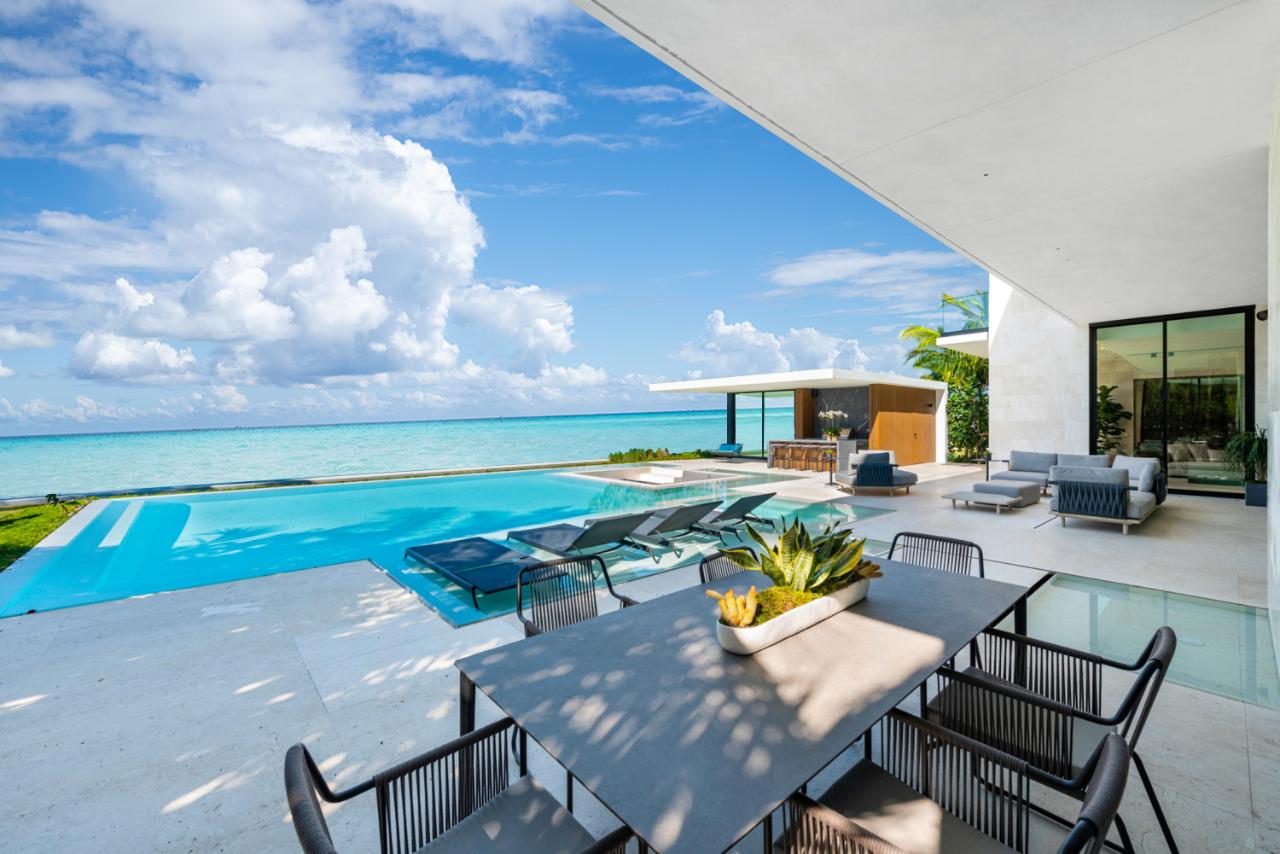
Turn-key units in developments like Aqualina at Cable Beach, Goldwynn Residences, and Baha Mar Residences (Rosewood, SLS, Grand Hyatt). Popular with Canadian buyers from Toronto, Vancouver, and Calgary for lower maintenance and built-in rental management.
Gated Community Homes
Ocean Club Estates (Paradise Island), Albany (co-founded by Tiger Woods & Justin Timberlake), Lyford Cay, and Old Fort Bay. Secure, family-friendly with world-class marina, golf, and beach club amenities. Popular for extended winter stays of 3–6 months.
Beachfront Villas
Standalone waterfront homes on Cable Beach, Eastern Road, and the Out Islands (Harbour Island, Exuma, Eleuthera). Strongest appreciation per BREA market data. Appeals to Canadian buyers seeking privacy and direct beach access.
New Developments
Four Seasons Bahamas (50 branded residences, 2027), GoldWynn Penthouses, and marina projects offer pre-construction pricing that frequently meets or exceeds the $1M EPR threshold. Early access through Glenn.
 Beyond EPR
Citizenship Pathway for Canadians
After holding Economic Permanent Residency for 10 years and residing in The Bahamas for at least 6 of those years, you may apply for Bahamian citizenship through naturalisation under the Bahamas Nationality Act. The decision is discretionary, granted by the Minister responsible for immigration.
Dual citizenship: The Bahamas does not formally recognise dual citizenship. Technically, you would be required to renounce your Canadian citizenship upon naturalisation. However, enforcement has historically varied. For Canadians: Canadian citizenship is not automatically lost upon acquiring another nationality under the current Citizenship Act (Canada). Voluntarily renouncing Canadian citizenship is irrevocable and affects access to healthcare, CPP, OAS, and the right to live/work in Canada.
Most Canadian investors maintain EPR indefinitely rather than pursuing naturalisation, preserving both their Canadian passport and Bahamas residency rights. EPR provides the primary benefits of residing in The Bahamas without dual citizenship complications.
Step by stepHow Canadian Investors Obtain Bahamas Residency
Contact Glenn
Discuss your budget, goals, timeline, and preferred property type. Get connected with a Canadian cross-border tax advisor for departure tax and T1135 structuring.
Plan Your Tax Structure
Work with your Canadian CPA or tax lawyer on departure tax under s.128.1, T1135 personal-use exemption, capital gains crystallisation, and Form T1161 if emigrating.
Visit Nassau
Fly direct from Toronto Pearson (3h20m). Glenn arranges 2–3 days of curated property viewings across qualifying EPR-eligible developments.
Reserve & Sign SPA
Place a deposit (typically 10%) and sign the Sale and Purchase Agreement. Glenn coordinates with your Bahamian attorney for title search at the Registrar General's Office.
Transfer Funds
Wire from your Canadian bank (RBC, TD, Scotiabank, BMO, CIBC). BSD is pegged 1:1 to USD. Title search and due diligence proceed in parallel.
Close & Register
Complete conveyance at your Bahamian attorney's office. Pay VAT on conveyance (~5% buyer share) and legal fees (2.5%–3.5%). Title registered at the Registry of Records.
File EPR Application
Glenn compiles financial references, Royal Bahamas Police Force clearance, medical certificate, and property documents. Application submitted to Bahamas Department of Immigration with $100 processing fee.
Receive EPR Certificate
Approval typically 6–18 months. Pay $20,000 government fee (or $25,000 with work rights) plus $300 per dependent. EPR certificate valid for life. Enter and exit freely.
Glenn Ferguson
BREA #1247 · Bahamas MLS · Residency Consultant · 24+ Years
Glenn has guided hundreds of Canadian investors from Toronto, Montreal, Vancouver, Calgary, and Ottawa through Bahamas property acquisition and EPR applications. His expertise includes cross-border transaction coordination with Canadian accountants, T1135 structuring, and departure tax timing.
Request a Canadian Investor Consultation
Complete the form below and Glenn will respond within 24 hours with a personalised property shortlist and EPR timeline for your situation.
Canadian Investor FAQ
More Resources for Canadian Investors
Residency by Investment Guide
Complete guide to all Bahamas residency options for foreign investors.
Complete Buying Guide
Step-by-step process for purchasing Bahamas real estate as a foreigner.
Can a Foreigner Buy?
Legal requirements, property rights, and approval process for foreign buyers.
Aqualina at Cable Beach
Luxury beachfront condos from $1.2M. On-site management for absentee owners.
Albany Bahamas Residency
EPR through Albany's ultra-luxury resort community. Marina, golf, school.
2026 Market Report
Nassau price trends, rental yields, and investment outlook.
Four Seasons Residences
50 branded residences on Cable Beach. Delivery 2027.
Browse All Listings
Search all homes, condos, and land for sale in Nassau and the islands.
🍁 Canadian Investor? One Call to Start
Property search, closing, CRA coordination, and EPR application — managed by Glenn. 24 years of local knowledge. Free buyer agent service.
Call 1-242-395-8495 · ASK Glenn
To add this web app to your homescreen, click on the "Share" icon
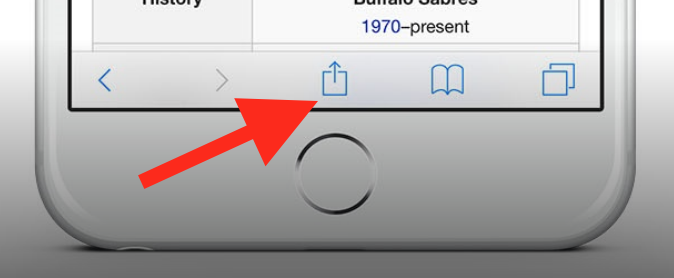
Then click on "Add to Home"
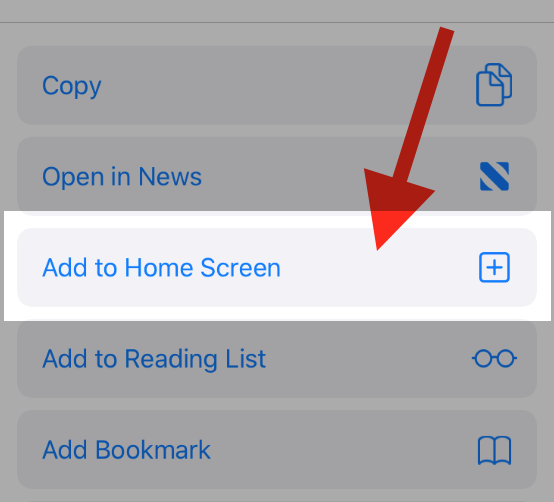
To add this web app to your homescreen, click on the "Share" icon
Then click on "Add to Home"
It looks like your browser doesn't natively support "Add To Homescreen", or you have disabled it (or maybe you have already added this web app to your applications?)
In any case, please check your browser options and information, thanks!
It looks like your browser doesn't natively support "Add To Homescreen", or you have disabled it (or maybe you have already added this web app to your applications?)
In any case, please check your browser options and information, thanks!